THE MONTESSORI CURRICULUM
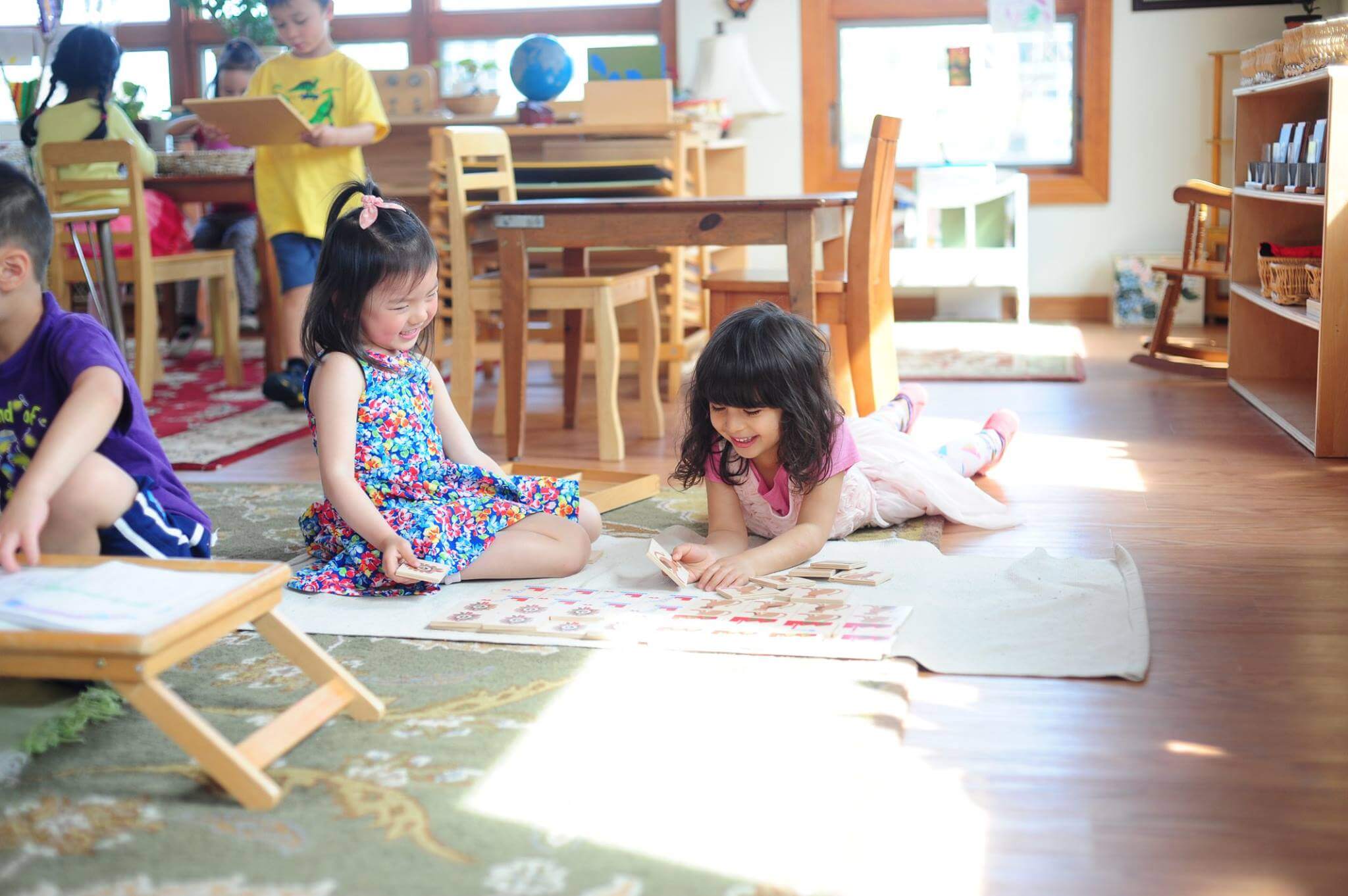
In the Montessori classroom, the space is divided into several logical
areas by low open shelves: practical life, sensorial, language, math, art,
music, geography and science. The Montessori Curriculum is an
integrated thematic approach that ties the separate disciplines together
into studies of the physical universe, the world of nature, and the human
experience. In this way, one lesson leads to many others. Each material
isolates one concept or skill that has been specially designed in a way that
children are naturally drawn to want to work with it with little or no nudging
from adults. Each material has been also designed so that a child can
normally check his own work; we call this a built-in “control of error.”
The intention of the materials is not to keep the children dependent on
these artificial learning aids forever; they are used as tools to help children
work and learn at their own pace and to see abstract ideas presented in a
very concrete, three-dimensional way while helping them grasp and
understand what they are working on.
10/13/10
Curriculum Night
(7:00pm - 8:30pm)
November
Parent/Teacher Conferences
(by appointment)
11/19/10
Thanksgiving Feast
11/25/10-11/26/10
NO SCHOOL
Thanksgiving Break
12/6/10 - 12/10/10
Summer Camp Registration Week
(Early Birds $50 Off)
12/17/10
Celebration of Light
12/20/10 - 12/24/10
NO SCHOOL
Winter Break
12/31/10
NO SCHOOL
New Year's Eve
1/10/11 - 1/21/11
Registration Week
(Re-enrollment due for 2011-2012
School Year)
1/17/11
NO SCHOOL
Martin Luther King
Jr's Birthday
February
Parent/Teacher Conferences
(by appointment)
4/13/11
Family Night (5:30pm - 7:30pm)
5/26/11
Kindergarten Graduation
5/27/11
Fun Fair (Last day of school for
Part-Time Students)
5/30/11
NO SCHOOL - Memorial Day
6/1/11
Summer Camp Begins
7/4/11
NO SCHOOL
Independence Day
2010-2011 All-Day
School Calendar
Our Program
Lincolnshire & The Grove Montessori Schools
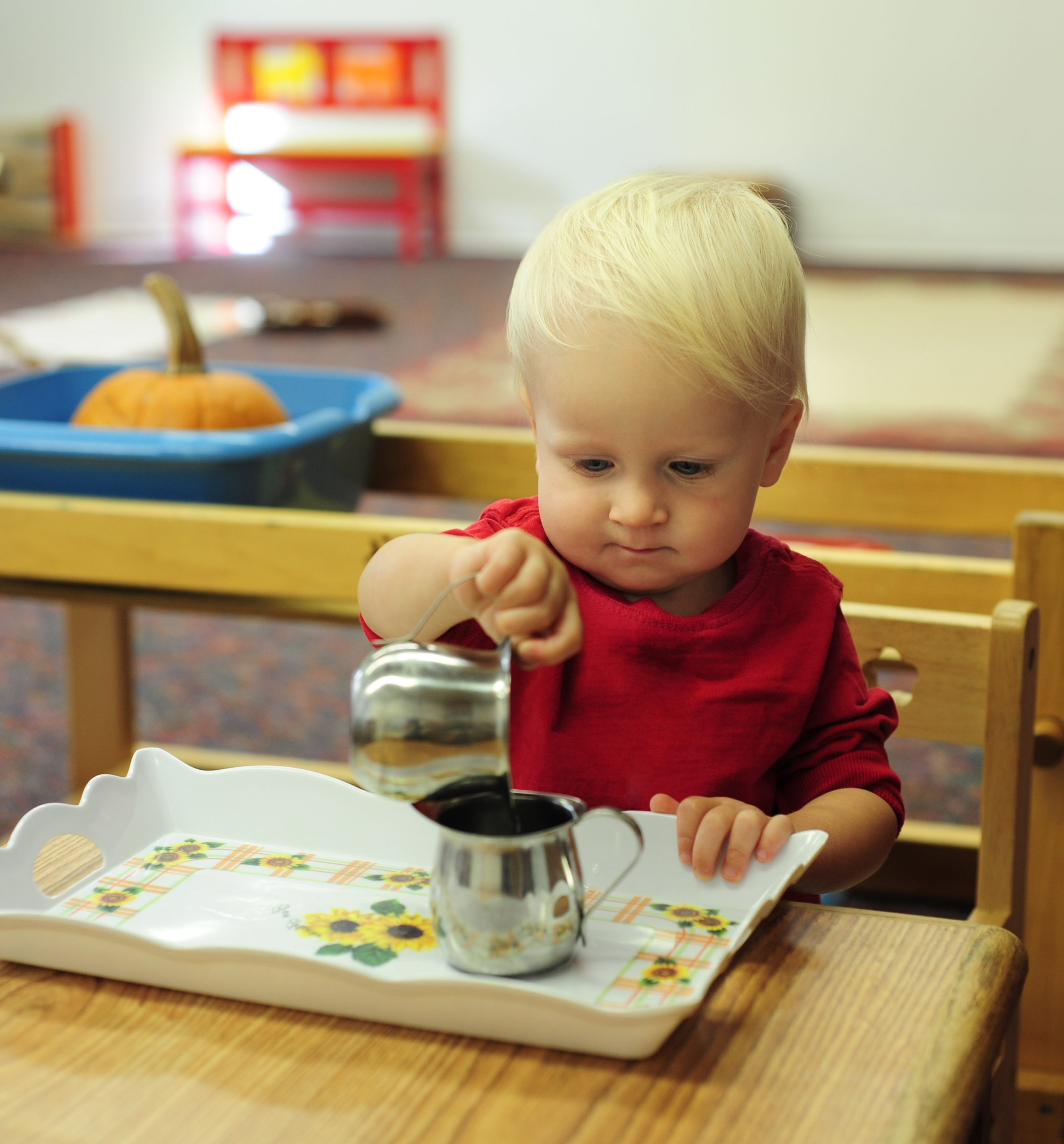
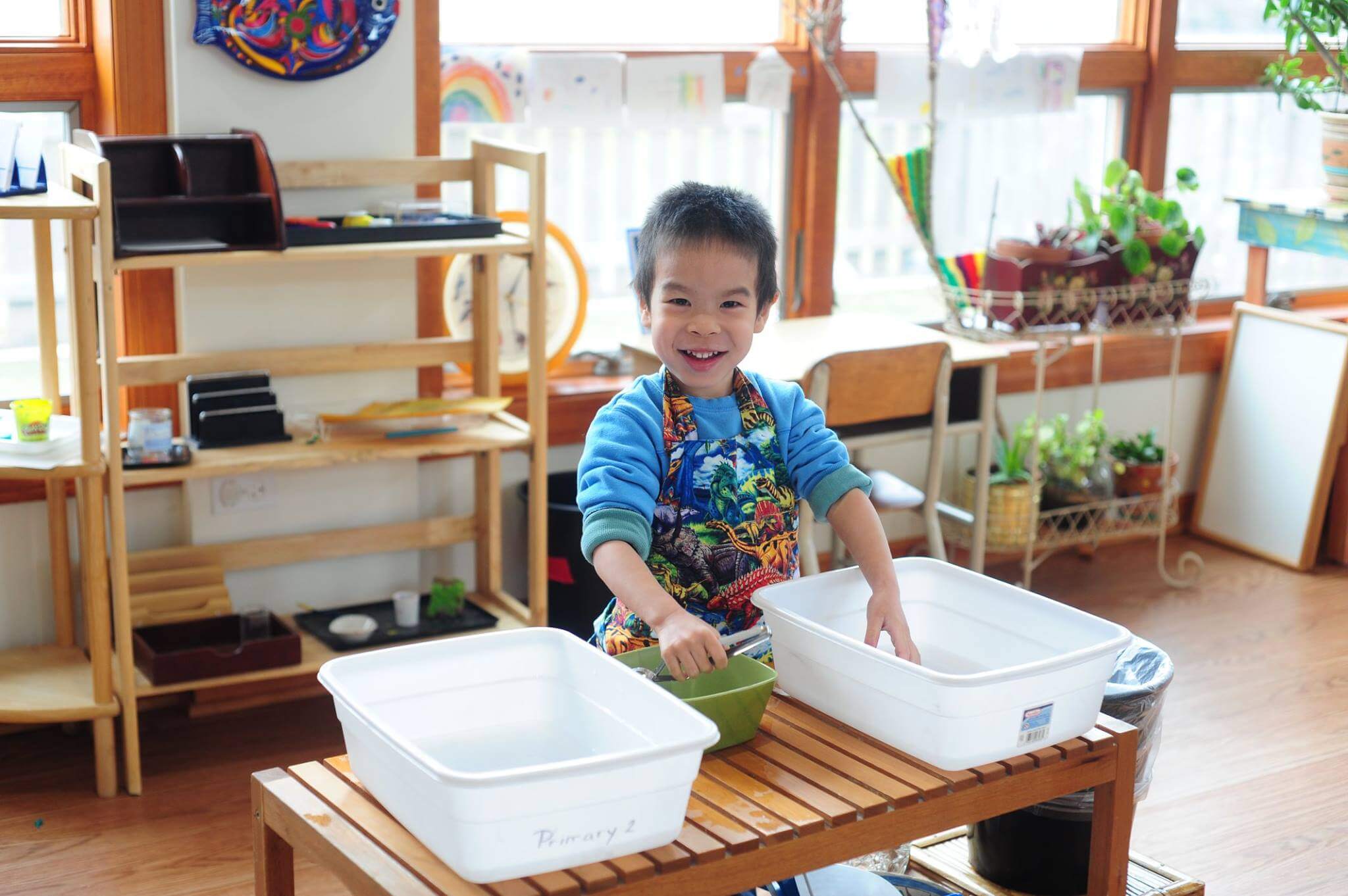
Practical Life
This area of the curriculum is designed to invite the young
learner to act and work on real life tasks that foster
independence, coordination, order and concentration. It is in a
sense the doorway to the Montessori curriculum.
Sensorial
The sensorial materials are designed to aid the child in training
and refining his/her five senses. Dr. Montessori discovered that
by helping children to order, compare and classify sensory
stimulation, their intellectual development was greatly assisted
and all future learning became more meaningful and useful.
Mathematics
The central purpose of the Math materials in the early years is to lay the foundation for later cognitive development
and to prepare for the gradual transition to abstract thinking. The primary values of these earlier activities in
mathematics are found in the way they transform ideas into actions on concrete materials.
Language
Language development is a concern of the entire Montessori classroom. Many activities in other areas, as well as
with a large group, foster vocabulary development, communication skills, writing and reading readiness.
Science
Science is an integral element of the Montessori curriculum. Among other things, it represents a way of life: a clear
thinking approach to gathering information and problem solving.
Grace and Courtesy
Grace and courtesy lessons are presented daily. Children are especially drawn to these activities because of their
sensitive periods for learning precise movements and social skills, as well as their need to adapt and belong to their
particular culture.
Music/Creative Movement/Art
Music and movement education will also be important parts of the curriculum as well as the Arts. They offer children
ways to express themselves, their feelings, experiences and ideas.
History/Geography/Cultural Awareness
We introduce history and geography as early as age three. The youngest students work with specially designed
maps and begin to learn the names of the world’s continents and countries. Additionally, the children gain an
awareness of the world around them by exploring other countries, their customs, food, music, climate, language and
animals.